Living here
Why Do So Many Europeans Love Living in Da Nang?
Winter sun, the cost of living, visas, flights and working European hours from the beach.
Bài viết này hiện chỉ có bản tiếng Anh. Menu và phần điều hướng đã chuyển sang tiếng Việt. Alice nói tiếng Việt và tiếng Anh, nhắn tin cho cô nếu bạn cần giải thích bằng tiếng Việt.
Key takeaways
- Europeans come to Da Nang for warm winters, a long public beach inside the city, lower rent and an easy, café-centred way of life.
- In my listings in November 2026, a one bedroom apartment had a median rent of about $690 a month and a two bedroom about $1,400.
- Germany, France, Italy, Spain, the UK and the Nordic countries can stay 45 days without a visa, more European countries were added for tourism in 2025, and everyone else can get a 90 day e-visa.
- Da Nang is 6 hours ahead of Central Europe in winter and 5 in summer, so a European working day runs from mid afternoon into the evening, leaving mornings for the beach.
- There are no direct flights from Western Europe. Most people connect through Singapore, Bangkok, Hanoi or Ho Chi Minh City.
Why do so many Europeans love living in Da Nang?
Because Da Nang offers a warm, unhurried beach city in the months when much of Europe is cold and dark. December to February here run from about 18 to 26°C, the beach is public and ten minutes from the centre, rents are lower than in most Western European capitals, and daily life happens in cafes, on scooters and by the sea.
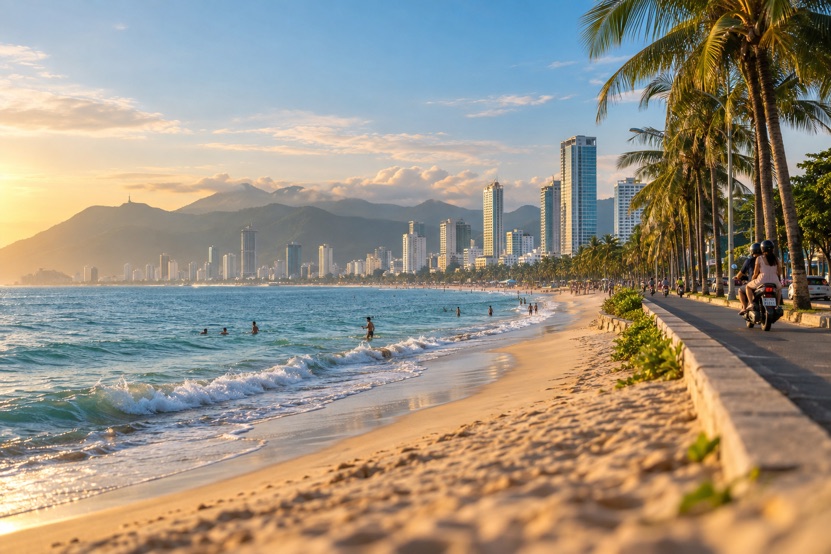
The city is also small enough to learn in a month. Most foreign residents live in a handful of areas between the river and the beach, everything is a short Grab ride away, and there is a large community of remote workers, families and retirees from Europe and elsewhere.
Europe's winter is Da Nang's best season for long lunches and beach walks.
How warm is Da Nang in the European winter?
Mild rather than hot. From December to February, days in Da Nang run from about 18 to 26°C, warm enough for walks on the beach and lunch outside, though the sea is cooler and often rougher than in summer. By March it is 22 to 30°C, and from April the sea is warm again.
| Month | Temperature | What it is like |
|---|---|---|
| November | 23 to 30°C | Rainy season, heavy rain |
| December | 20 to 26°C | Cool, cafés and restaurants |
| January | 18 to 25°C | Cool and gentle |
| February | 18 to 25°C | Clearing, before the heat |
| March | 22 to 30°C | Warm, beach mornings return |
The one season to plan around is October and November, when heavy rain and the occasional storm arrive. If you are coming for the winter, December to April is the sweet spot. Our guide to the weather month by month has the whole year.
How much does it cost for a European to live in Da Nang?
Less than in most of Western Europe, mainly because of rent. In my listings in November 2026, a one bedroom apartment had a median rent of about $690 a month and a two bedroom about $1,400, for leases of six months or more. A three bedroom house or villa had a median of about $1,740.
Electricity comes on top and is the bill that surprises people most, at 4,000 to 6,000 dong per kWh when the landlord bills it. Water, internet and rubbish collection are small by European standards. Eating out ranges from a bowl of noodles for a couple of euros to restaurants priced like home. Our rent guide has prices by area, and our guide to renting as a foreigner lists every running cost.
Do Europeans need a visa for Vietnam?
Many do not, for a first stay of up to 45 days. Citizens of Germany, France, Italy, Spain, the United Kingdom, Denmark, Sweden, Norway and Finland can enter Vietnam without a visa for up to 45 days. In 2025 Vietnam added more European countries, including the Netherlands, Belgium, Switzerland and the Czech Republic, with 45 days without a visa for tourism. Most of these newer exemptions are set to run until 14 August 2028.
Everyone else, and anyone staying longer, can apply online for an e-visa of up to 90 days, with single or multiple entry. Longer stays need a new visa, a business visa or a temporary residence card, and the rules change often, so check the official e-visa portal or Vietnam's immigration department before you book. Whatever you hold, your landlord must register your address with the local police, which our guide to renting as a foreigner explains.
How do you fly from Europe to Da Nang?
With one stop. There are no direct flights from Western Europe to Da Nang, so most people connect through Singapore, Bangkok, Seoul, Hanoi or Ho Chi Minh City. Vietnam Airlines started a daily nonstop flight from Singapore to Da Nang on 17 November 2026, and Thai Airways is due to start flying Bangkok to Da Nang from 1 December 2026, which makes the connections through both hubs easier.
From Russia there are direct flights, from Moscow and Vladivostok. Russian visitors are one of Da Nang's fastest growing groups: nearly 300,000 arrived in the first eight months of 2026, up about 150 percent on a year earlier, making Russia the city's seventh largest market.
Can you work European hours from Da Nang?
Yes, and the time difference suits the beach. Vietnam is on UTC+7 all year with no daylight saving, so Da Nang is 6 hours ahead of Paris, Berlin or Rome in winter and 5 hours ahead in summer, and 7 or 6 hours ahead of London. A 9am to 5pm day in Central Europe runs from 3pm to 11pm in Da Nang in winter.
That leaves the morning free for a swim, errands and lunch, with meetings in the afternoon and evening. Reliable fibre internet is standard in most apartments, and our coworking guide lists the desks and cafes remote workers use.
Work European hours from 3pm, and the morning is yours.
Will you miss European food in Da Nang?
Less than you might think. Bread is part of daily life here, from the bánh mì baguette, a legacy of French rule, to bakeries across the city, and coffee culture runs deep. The beach districts have Italian, French and Mediterranean restaurants, and imported cheese, wine and charcuterie are sold in supermarkets and delis, at higher prices than at home.
Vietnamese food is fresh, cheap and excellent, and worth eating most days. Our guides to where locals eat, the best coffee shops and the city's top restaurants cover both.
Is Da Nang safe for Europeans?
Yes. Violent crime against foreigners is rare, and Da Nang scores 23.3 on Numbeo's crowd sourced crime index and 76.7 on its safety index, as of September 2026. The usual city sense applies: keep your passport in the apartment safe, hold your phone firmly in traffic, and agree taxi fares through Grab.
The bigger daily risk is the road. Traffic is dense and scooters come from every direction, so take Grab cars until you know the city, and wear a helmet if you ride.
What is healthcare like for Europeans in Da Nang?
Good, with English speaking doctors at the two providers most foreigners use. Vinmec Da Nang International Hospital, at 30 Thang 4 Street, has a 24 hour emergency department and specialist care, and Family Medical Practice Da Nang, at 96 to 98 Nguyen Van Linh in Hai Chau, covers everyday GP visits and bills international insurers directly.
A European Health Insurance Card does not cover care outside the EU, and national health systems at home rarely pay for treatment in Vietnam. Arrive with an international health or travel insurance plan that covers your whole stay.
Where do Europeans live in Da Nang?
Mostly in My An and An Thuong, the walkable grid behind the middle of My Khe beach, with cafes, bakeries and restaurants a few streets apart. Son Tra suits people who want quieter streets near the sea, Hai Chau those who want the river and city life, and southern Ngu Hanh Son families who want a house with a garden.
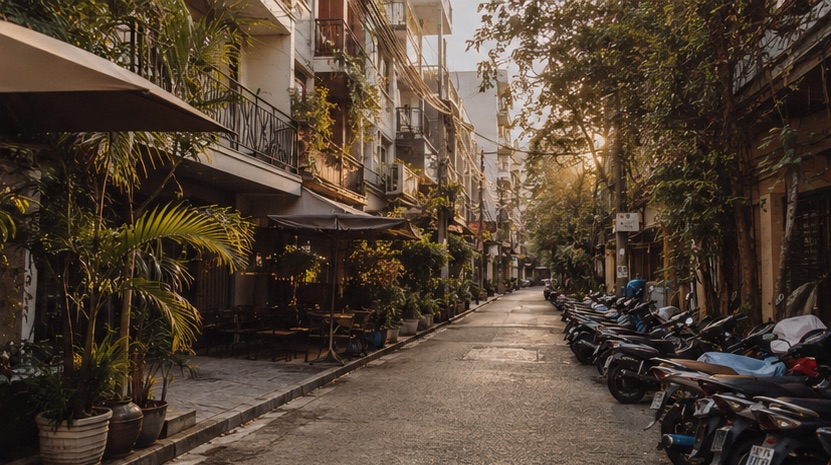
Our guide to where to live in Da Nang compares the five areas on rent, noise and flood risk.
Frequently asked questions
Why do Europeans move to Da Nang?
For mild winters of about 18 to 26°C from December to February, a long public beach inside the city, rent from about $690 a month for a one bedroom apartment, 45 days without a visa for many European passports, and a time difference that lets them work European hours in the afternoon and evening.
Do Europeans need a visa for Vietnam?
Many do not for stays of up to 45 days, including citizens of Germany, France, Italy, Spain, the UK, Denmark, Sweden, Norway and Finland. More European countries, including the Netherlands, Belgium and Switzerland, were added for tourism in 2025. Everyone else can apply online for an e-visa of up to 90 days.
Are there direct flights from Europe to Da Nang?
Not from Western Europe. Most travellers connect through Singapore, Bangkok, Seoul, Hanoi or Ho Chi Minh City. Vietnam Airlines flies daily from Singapore to Da Nang since 17 November 2026, and there are direct flights from Moscow and Vladivostok.
What is the time difference between Da Nang and Europe?
Da Nang is on UTC+7 with no daylight saving. It is 6 hours ahead of Central Europe in winter and 5 hours ahead in summer, and 7 or 6 hours ahead of the UK. A 9am to 5pm day in Paris or Berlin runs from 3pm to 11pm in Da Nang in winter.
How much is rent in Da Nang for Europeans?
The same as for anyone else. In Alice Rentals listings in November 2026, a one bedroom apartment had a median rent of about $690 a month and a two bedroom about $1,400, for leases of six months or more. Electricity is billed on top.
Does the European Health Insurance Card work in Vietnam?
No. The EHIC only covers care in the EU and a few nearby countries. Europeans living in Da Nang should carry international health or travel insurance, which Vinmec Da Nang International Hospital and Family Medical Practice Da Nang can bill directly.
 Zalo